Lars Schwarz · 13 September 2026
How Microclimates Shape Unique Plant Adaptations in Remote Mountain Snow Zones
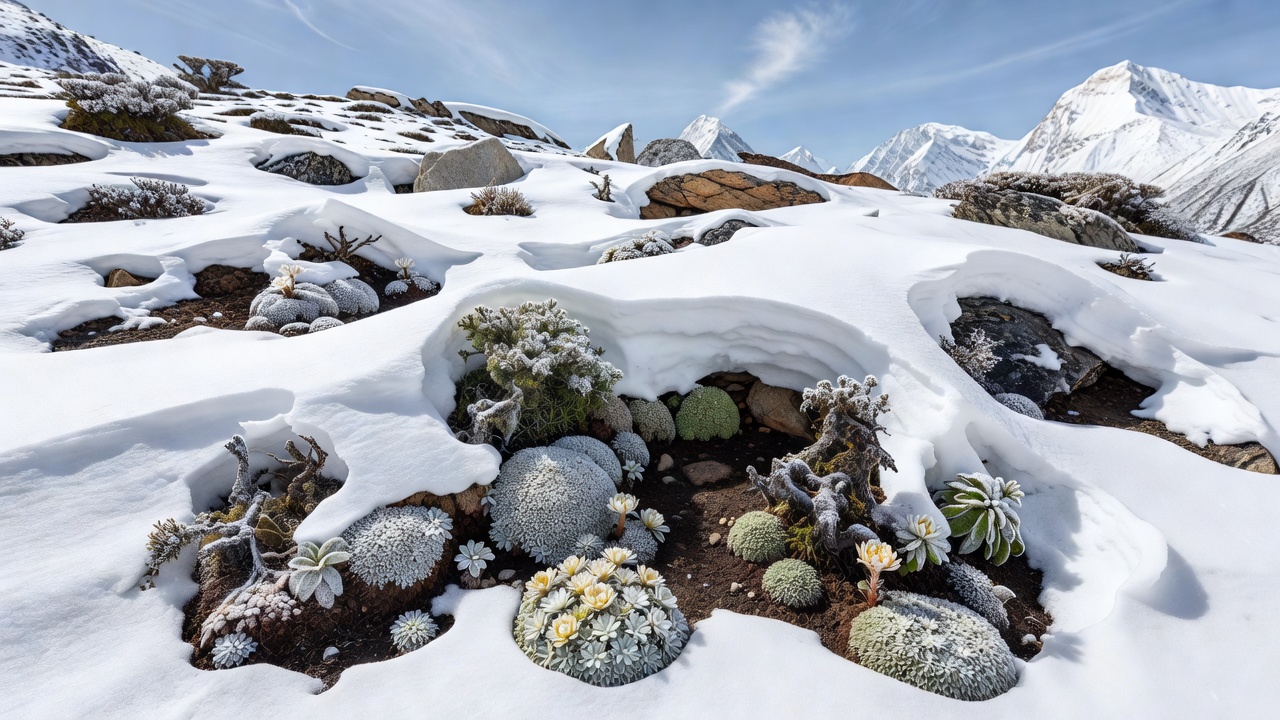
Remote mountain snow zones create intricate microclimates through interactions between elevation gradients, wind patterns, snow accumulation, and solar exposure, and these localized conditions drive specialized plant adaptations that differ sharply from surrounding landscapes. Researchers have documented how slight variations in temperature and moisture within a single slope can support distinct communities of cushion-forming species, dwarf shrubs, and perennial herbs that complete their life cycles during brief windows of thaw.
Formation of Microclimates in Snow-Dominated Terrains
High-altitude snow zones experience rapid shifts in conditions over short distances because snow depth insulates soil while exposed ridges lose heat quickly at night, and prevailing winds redistribute snow into drifts that persist into summer. Data from monitoring stations across multiple ranges indicate that south-facing slopes may warm several degrees above adjacent north-facing areas during daylight hours, creating pockets where growing seasons extend by weeks while nearby sites remain frozen. Observers note that these temperature gradients intensify during early autumn when solar angles decrease and radiative cooling accelerates, setting the stage for the next season's plant responses.
Precipitation patterns further refine these zones because orographic lift concentrates moisture on windward faces, yet leeward areas receive less snow and experience earlier melt. Soil moisture levels therefore fluctuate dramatically within meters, prompting roots to develop extensive lateral networks or deep taproots depending on the immediate surroundings. Studies conducted in the Rocky Mountains and the European Alps have recorded how such heterogeneity supports higher species richness than uniform snow cover would allow.
Plant Adaptations Driven by Localized Conditions
Plants in these environments exhibit traits synchronized with microclimate signals, including compact growth forms that trap heat near the ground, anthocyanin pigments that protect tissues during intense UV exposure, and antifreeze compounds that prevent cellular damage during repeated freeze-thaw cycles. Cushion plants such as those in the genera Saxifraga and Silene create their own thermal microhabitats by reducing wind speed and retaining moisture, which enables associated species to colonize otherwise inhospitable surfaces. Research indicates that individuals growing in deeper snow patches allocate more resources to vegetative spread, whereas those on windswept ridges prioritize seed production before autumn frosts arrive.
As monitoring efforts continued into September 2026, satellite imagery combined with ground sensors revealed earlier snowmelt on certain south-facing cirques compared with previous decades, allowing some populations to initiate flowering weeks ahead of historical averages while others remained under late-lying drifts. These shifts have prompted further investigation into how genetic diversity within single species may buffer against changing microclimate distributions.
Case Examples from Distinct Mountain Regions
In the Canadian Rockies, researchers have tracked populations of mountain avens that display thicker leaf cuticles on exposed ridges than in snow accumulation basins only a few hundred meters away. Similar patterns appear in the Southern Alps of New Zealand where Celmisia species adjust stomatal density in response to local humidity gradients created by persistent snowbanks. Data collected by the Australian Antarctic Division's mountain ecology programs show comparable adaptations among cushion plants on sub-Antarctic peaks, underscoring the convergent evolution driven by microclimate pressures worldwide.
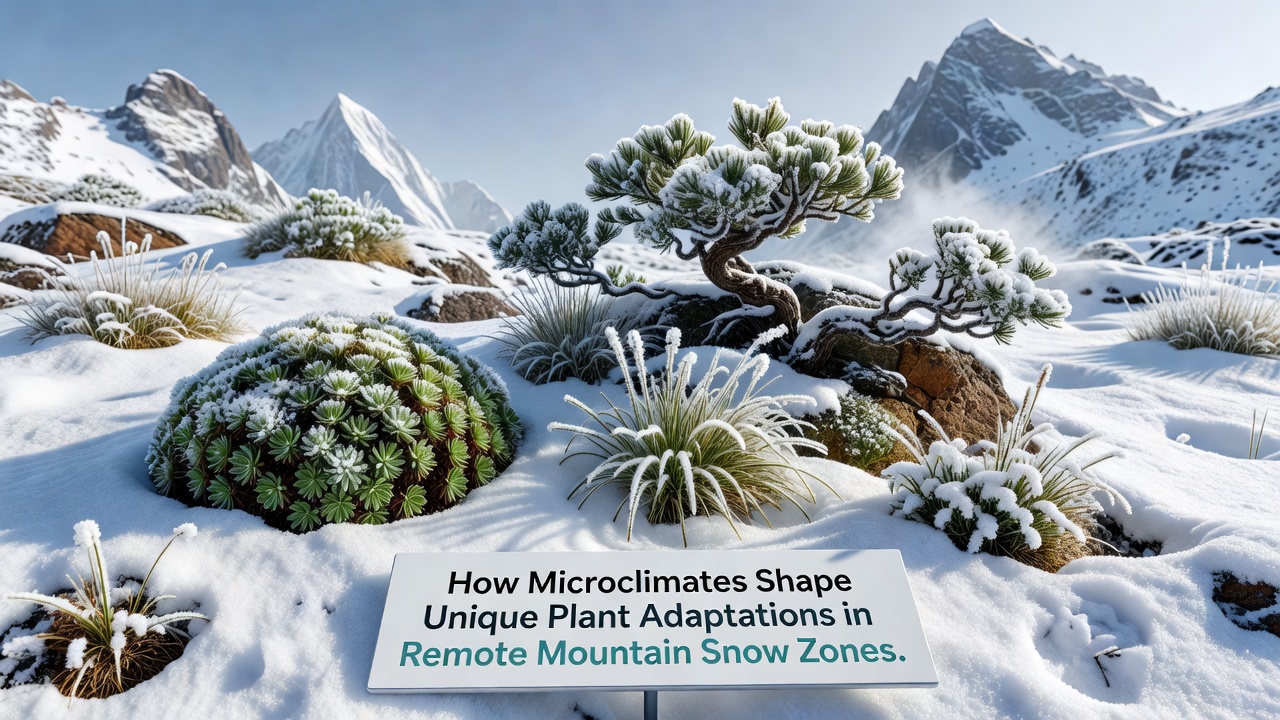
Wind-sculpted krummholz formations at treeline further illustrate how microclimates influence architecture because flagged branches on the windward side reduce drag while leeward sides produce denser foliage. These structural responses protect lower-stature vegetation and create additional sheltered zones that support understory herbs and lichens during the short growing period.
Interactions with Broader Environmental Factors
Although microclimates dominate local plant distribution, larger-scale influences such as atmospheric nitrogen deposition and changing precipitation regimes interact with these fine-scale patterns. According to reports from Environment and Climate Change Canada, increased variability in winter snowfall has lengthened the duration of bare ground on some mid-elevation slopes, expanding habitat for species previously restricted to lower elevations. Yet the same reports note that persistent snow patches in cirques continue to maintain refugia for cold-adapted endemics, preserving genetic reservoirs even as surrounding areas transition.
Soil development proceeds slowly in these zones because freeze-thaw action fragments rock and limits organic matter accumulation, yet plants accelerate weathering through root exudates and mycorrhizal associations that enhance nutrient uptake in nutrient-poor substrates. Long-term plots established by the U.S. Geological Survey demonstrate that species composition stabilizes once microclimate niches are occupied, with turnover rates remaining low unless major disturbances such as rockfalls or extreme melt events reset the surface.
Conclusion
Microclimates generated by snow distribution, topography, and radiation create a mosaic of growing conditions that select for specialized morphological and physiological traits in mountain plants. Observations across hemispheres confirm that these localized environments sustain biodiversity and provide resilience against broader climatic fluctuations. Continued monitoring through networks such as the Global Observation Research Initiative in Alpine Environments will supply updated datasets that clarify how plant populations track shifting microclimate boundaries in remote snow zones.